
Collector guide · 10 min
The Ardabil carpets: history, myths and what they teach buyers
Editorial team · updated 2026-10-12
The pair
Two large Safavid medallion carpets are associated with the shrine of Shaykh Safi al-Din at Ardabil. One is in the Victoria and Albert Museum in London, the other in the Los Angeles County Museum of Art. Each has an inscription with a verse, a name read as Maqsud of Kashan, and a date corresponding to 1539–40 CE.
What is uncertain
Scholars still debate where the carpets were woven, whether they were made for the shrine, and how they were used there. In the nineteenth century the pair was repaired and sold in Europe. The London carpet was completed using material from the other, so the Los Angeles carpet is smaller and lacks borders.
Why the design matters today
The central sunburst medallion, the lamps hanging from it and the quarter-medallions in the corners have been copied for over a century. Many ‘Ardabil design’ rugs are woven in Iran, India, China and elsewhere, by hand and by machine. A famous design says nothing about where or how a particular rug was made.
Lessons for buyers
- A design name is not a place of origin
- Inscriptions and dates can be copied
- Ask for construction details, not only the design story
- Museum catalogues are the best source on the originals
Seeing the originals
The London carpet is shown in a low-light gallery to protect its dyes. Check the museum's current opening times before visiting.
A note on this guide
This is general information from the CraftPersia editorial team and has not been reviewed by a specialist. It is not a valuation, authentication or conservation treatment. For valuable or fragile pieces, consult a qualified conservator or appraiser.
Related photographs and screened examples
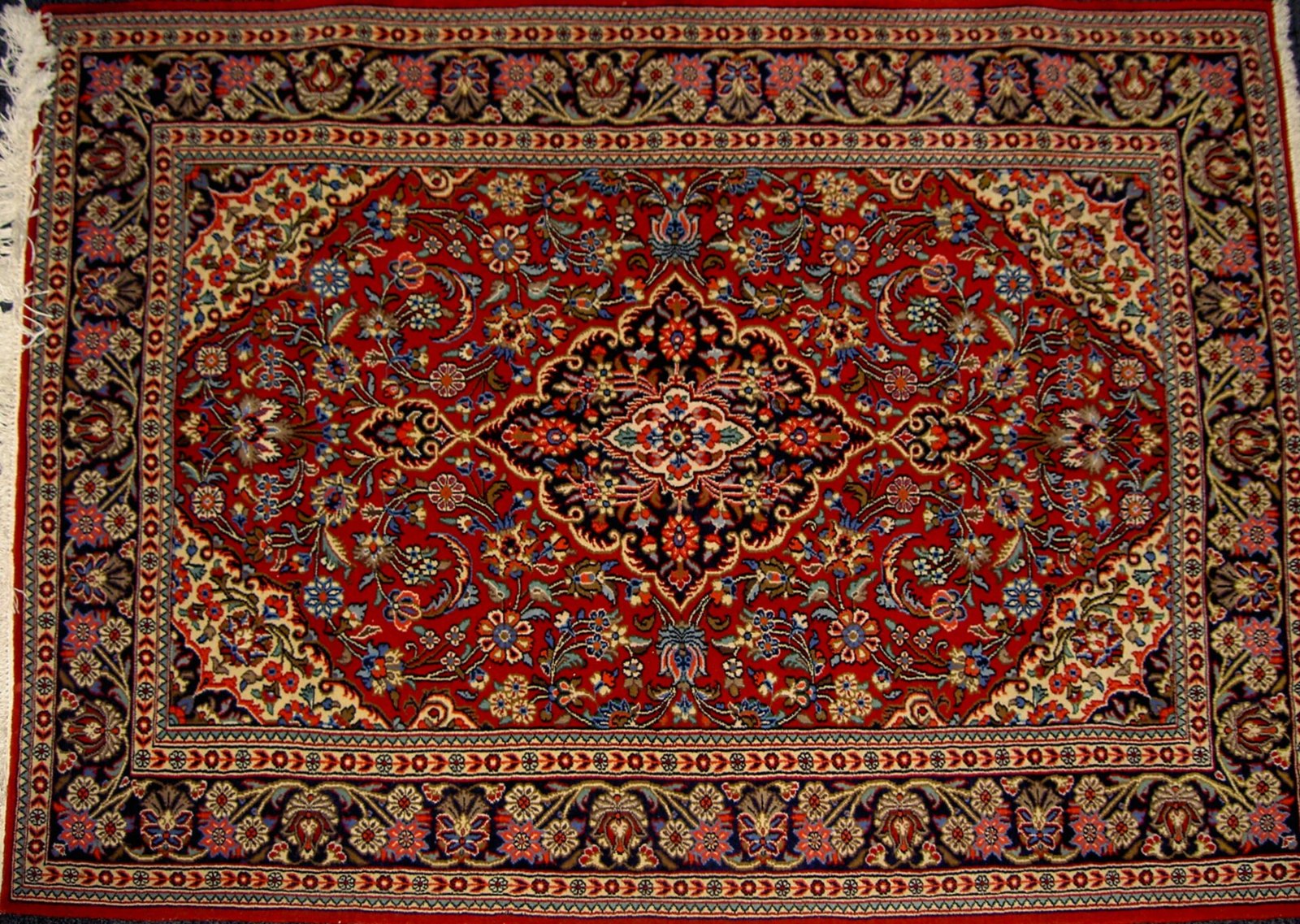
Representative photographs only. Marketplace examples rely on seller descriptions; CraftPersia has not independently authenticated their maker, origin, or rights status. Follow each source link for the listing context.