
Collector guide · 11 min
Afshar rugs: tribal and village weaving of Kerman province
Editorial team · updated 2026-10-14
Who the Afshar are
The Afshar are a Turkic-speaking group with branches in several parts of Iran. The best-known rugs come from Afshar villages and pastoral groups south-west of Kerman, around Sirjan.
Construction
Afshar rugs use wool or cotton warps, often with red-dyed wefts, and either knot type. Many are small: rugs, bags and saddle covers. Ends are often finished with a plain-weave strip.
- Red or pink wefts are common
- Small to medium sizes
- Lustrous wool on good pieces
- Kilim end strips
Designs
Look for repeating diamond medallions, chicken or rooster motifs, boteh rows and vase-and-flower designs borrowed from Kerman workshops.
Afshar versus Kerman
Kerman city carpets are curvilinear, finely knotted workshop pieces. Afshar rugs are usually coarser, more geometric and made in homes or villages.
Buying checklist
- Ask the seller what the regional name is based on: town, village group or design only
- Turn the rug over and look at knot type, warp colour and weft count
- Check ends, sides and pile height for wear or re-weaving
- Ask whether dyes have run or been chemically washed
- Look for repairs on bag faces that have been opened and sold as rugs
- Get any claim about age, region or handmade origin in writing
Care
Small Afshar rugs are often used in hallways. Use a non-slip underlay and vacuum without beater bars to protect the wool.
A note on this guide
This is general information from the CraftPersia editorial team and has not been reviewed by a specialist. Regional names in the rug trade are market labels, and design alone is weak evidence of origin. This guide is not a valuation or authentication.
Related photographs and screened examples
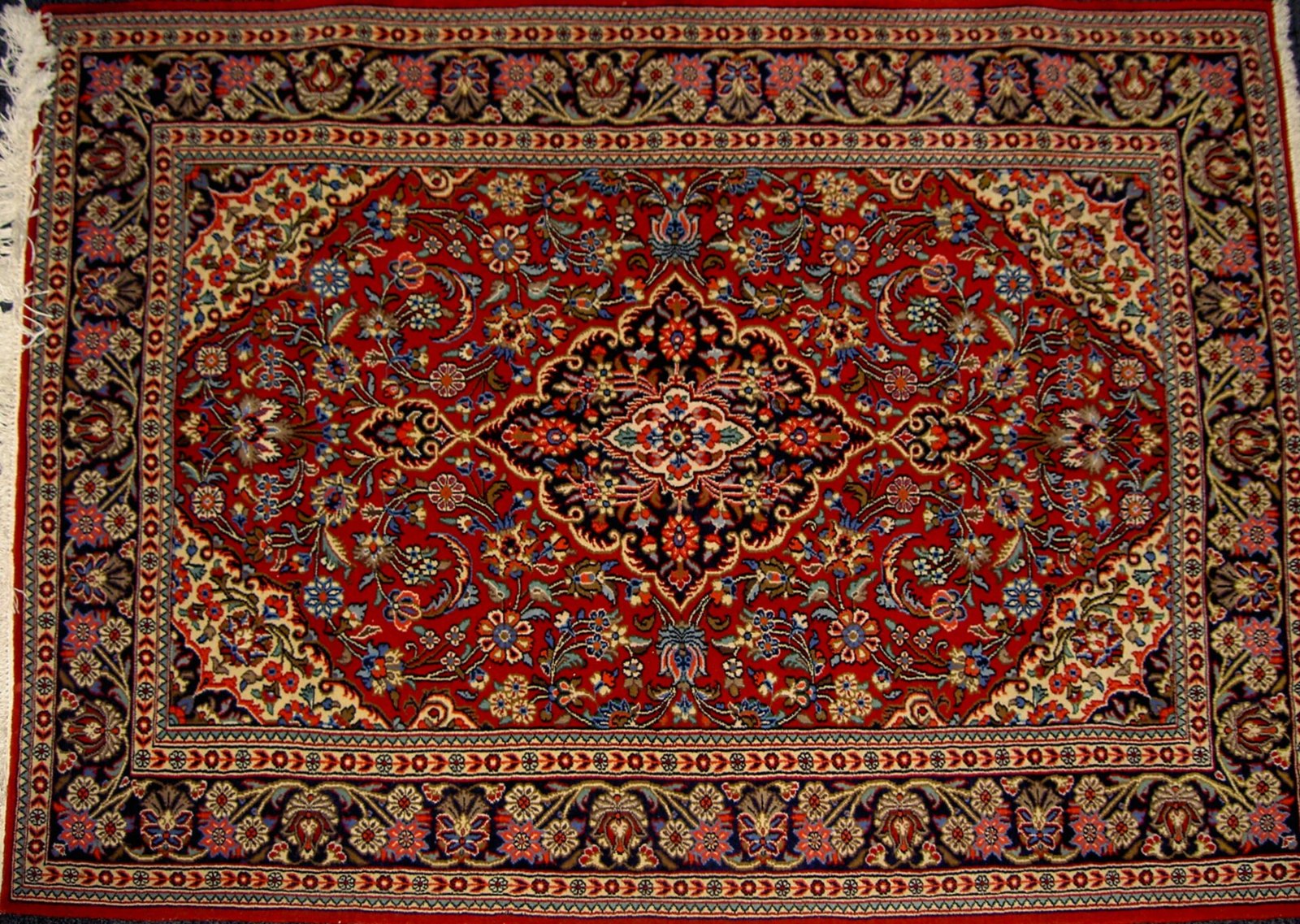
Representative photographs only. Marketplace examples rely on seller descriptions; CraftPersia has not independently authenticated their maker, origin, or rights status. Follow each source link for the listing context.