
راهنمای مجموعهداران · 3 min read
Reading a Safavid bird study from Isfahan: natural history, margins and inscription
CraftPersia editorial draft · specialist review pending · بهروزرسانی 2026-10-14
این راهنما هنوز به فارسی ترجمه نشده است و فعلاً به انگلیسی نمایش داده میشود.
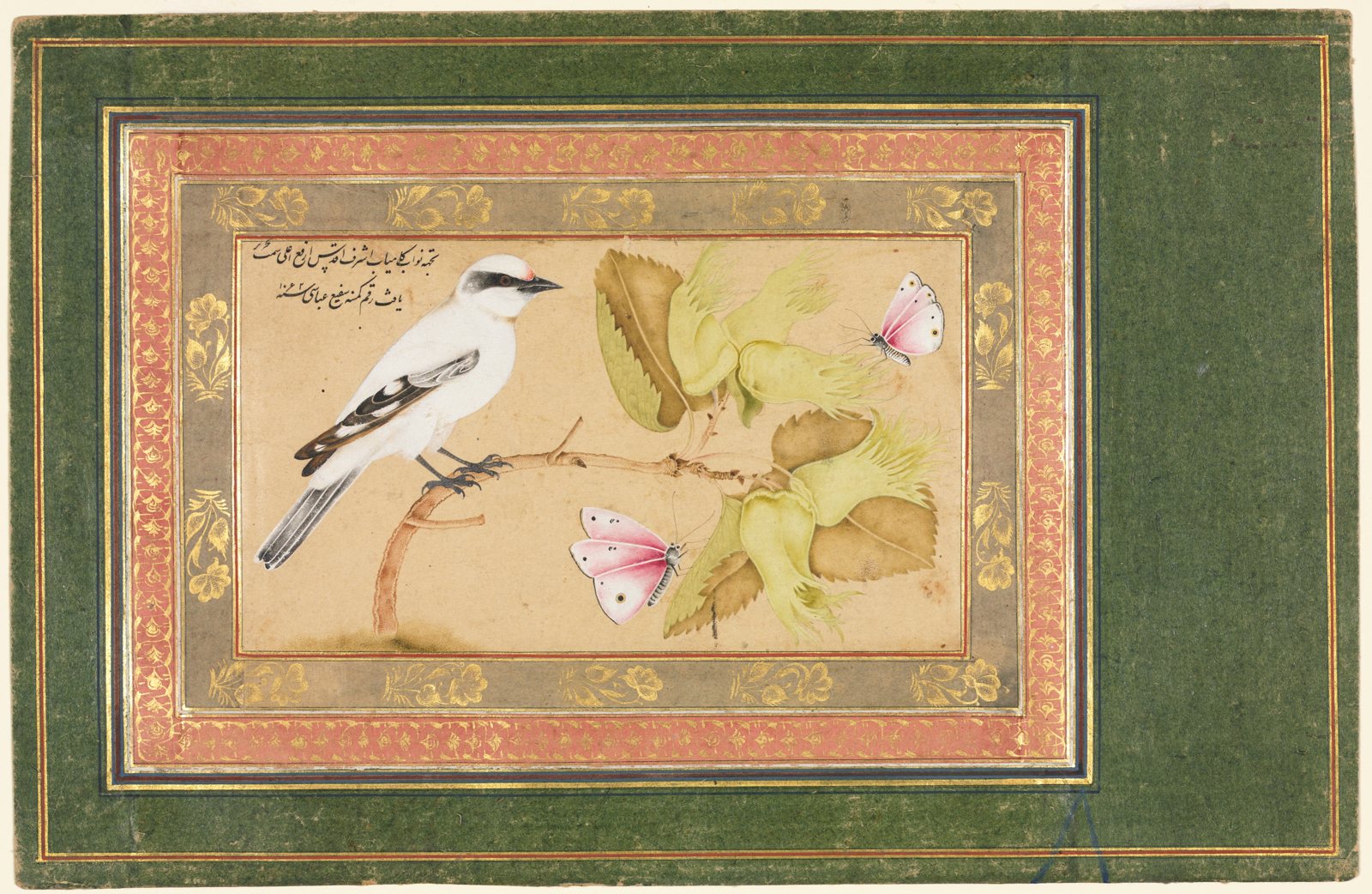
1651–52 · CP-LIB-CMA-1971-84 · consulted 2026-10-14 · Cleveland Museum of Art · CC0 (museum open access; resized JPEG) · منبع عکس ↗
An Isfahan painting with a dated record
Cleveland records this painting as Iran, Isfahan, Safavid period, dated 1651–52, opaque watercolor, ink and gold on paper; the sheet measures 16.1 × 25 cm and the image 7.7 × 13.4 cm. The museum relates it to the fashion for naturalistic plants and birds associated with the court painter Shafi‘ ‘Abbasi, son of Riza ‘Abbasi, some adapted from European botanical sources.
Keep the association as stated. Unless the museum record attributes the painting directly to an artist, describe it as belonging to the fashion the museum describes rather than as a work by a named painter.
Image, margins and inscription
The bird, branch, leaves and butterflies occupy a small painted field, surrounded by gold-decorated borders, coloured rulings and a green outer margin. Image and mount are different layers and may not be contemporary; album pages were frequently remounted. Measure and describe each separately.
An inscription appears at upper left. Do not paraphrase it without a specialist transcription; it may record a name, a date or verse, and errors in reading it would mislead later users of the record.
- Measure image and sheet separately.
- Treat margins as a possible later mount.
- Request a transcription of the inscription.
Paper, pigment and light
Opaque watercolour, ink and gold on paper are sensitive to light, humidity and handling. Fading of greens, flaking of white and abrasion of gold are typical risks. Store flat in acid-free housing and display only under low light for limited periods.
Never trim, glue or re-colour a historical page. Retouching alters evidence that may be needed to date the work or its mount.
Collecting research and the limits of a comparison
Accession 1971.84 is a comparative reference, not a certificate that can be borrowed by another object. For any candidate offered for sale, request its own dimensions, all-round photographs including the base or reverse, a dated condition report and a traceable ownership and export history. Visual similarity to a museum piece establishes neither date nor origin, and attractive objects are the most frequently copied.
Keep lawful provenance separate from stylistic attribution; an auction estimate or a confident description resolves neither. For contemporary handmade Iranian work, look instead for a named maker and real production information rather than a historical comparison. The museum photograph is released CC0 through the Cleveland open-access programme; that status does not extend to photographs of other objects or to a seller’s images.
- Ask for the object’s own measurements and views.
- Request documented ownership and export history.
- Treat the museum record as comparison only.
- Collection
- Cleveland Museum of Art
- Accession
- 1971.84
- Catalogue date
- 1651–52
- Origin as catalogued
- Iran
Keep the evidence layers separate
A useful research record distinguishes direct observation, the institution’s catalogue statements and your own interpretation. None of these should silently replace the others. Record the source and access date before comparing a historical object with a current listing.
- Observe: shape, layout and visible features.
- Attribute: retain the catalogue’s exact qualifications.
- Investigate: seek additional views, condition information and lawful provenance.
| Evidence | Documented statement | What it does not establish |
|---|---|---|
| Identity | Black and White Bird Perched on a Shrub · 1971.84 | Identity or authenticity of another object |
| Date | 1651–52 | An independent date for a similar listing |
| Material | Opaque watercolor, ink, and gold on paper | A complete technical analysis from the photograph |
| Origin | Iran | Provenance of contemporary goods with similar ornament |
| Photo licence | CC0 (museum open access; resized JPEG) | Rights to unrelated auction or shop photographs |
منابع و مطالعات بیشتر
- [1] Cleveland Museum of Art: Black and White Bird Perched on a Shrub, 1971.84 ↗Primary catalogue source; consulted 2026-10-14. Qualifiers and collection updates take precedence over this editorial reading.
- [2] Canadian Conservation Institute: Caring for cultural heritage ↗Preventive conservation context, not a treatment prescription.
این منابع زمینهٔ پژوهشی فراهم میکنند، نه تأیید اصالت یا پیشینهٔ یک شیء خاص. تفسیرهای سردبیری همچنان در دست بررسیاند.