
راهنمای مجموعهداران · 4 min read
Reading an Amlash silver cup: raised form, hunting scenes and relief
CraftPersia editorial draft · specialist review pending · بهروزرسانی 2026-10-14
این راهنما هنوز به فارسی ترجمه نشده است و فعلاً به انگلیسی نمایش داده میشود.
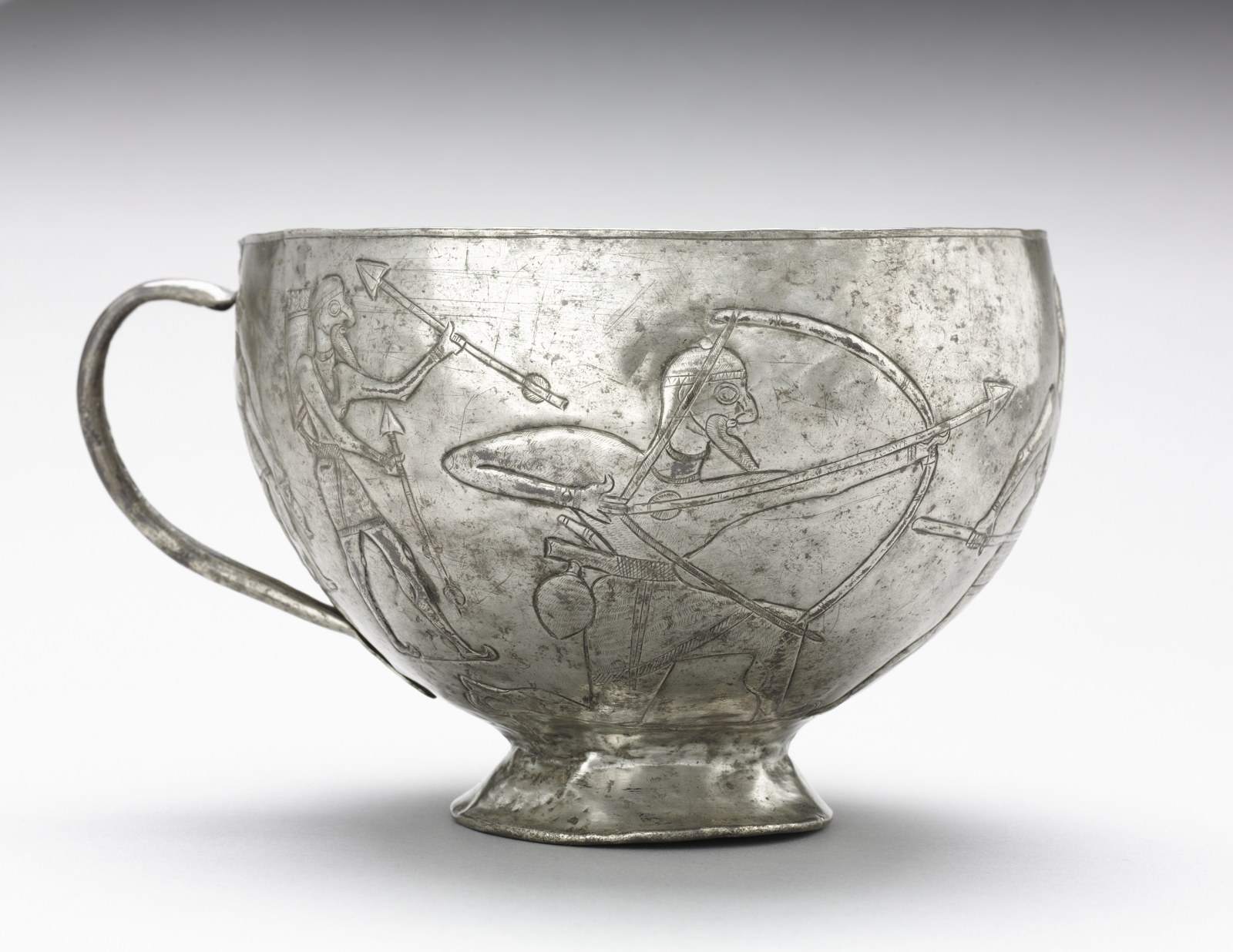
1100–1000 BCE · CP-LIB-CMA-1965-25 · consulted 2026-10-14 · Cleveland Museum of Art · CC0 (museum open access; resized JPEG) · منبع عکس ↗
An Amlash attribution with a particular accession
Cleveland Museum of Art records this silver cup as Iran, Amlash, and dates it to 1100–1000 BCE. Accession 1965.25 anchors those statements to one object. Amlash is the catalogue attribution, not a conclusion that can be transferred to every silver vessel with animals. Preserve the institutional wording and distinguish the manufacture date from the much later acquisition history.
The cup belongs to an ancient metalwork comparison, not to a contemporary workshop inventory. Its placement beside qalam-zani references is a way to compare working vocabulary across time; it does not establish an uninterrupted lineage to a modern engraver. Similar tools and surface effects can occur in different historical settings. A responsible record identifies where comparison ends and a historical claim would need additional scholarship.
Read the vessel before interpreting the hunt
The photograph retains the handle, rounded body, rim and foot. Begin with those relationships rather than cropping the hunting scene into a flat picture. Describe the figures, their orientation and the way their lines follow the curved wall. The museum title identifies a lion hunt, but neither that title nor the photograph supplies the name of the hunter, a particular event or the identity of an owner.
A single view shows only part of the circumference. An apparent break in a scene may result from the viewing angle rather than an intentional boundary. Measurements describe the physical cup; they should not be inferred from the size of the image on screen. Use additional collection views for a circumferential reading, and mark unseen areas as unseen rather than completing them from expectation.
- Record handle, rim, body and foot separately.
- Keep the museum title distinct from a named historical narrative.
- Do not invent figures on the unseen side.
Raised, chased and repoussé are different actions
The catalogue lists silver, raised, chased and repoussé. Raising concerns the formation of a metal body; chasing works detail from the front; repoussé develops relief by working from the reverse. These terms need not describe one uninterrupted operation performed by one person. Forming, joining, surface work and finishing can leave different evidence on the same object.
The image permits observation of contours and relief but cannot reconstruct tool order, annealing cycles or every joint. Relief is not automatically proof of repoussé: cast or pressed decoration may also stand above a surface. Here the technique wording is supported by the museum record. In a sale description, obtain the basis for the same wording instead of borrowing the museum attribution from visual resemblance.
Condition, silver and the limits of shine
Colour and shine in a photograph reflect illumination as well as material. They cannot independently establish silver purity, wall thickness or the amount of earlier polishing. Record dents, line interruptions and changes of surface by location without calling them ancient use wear. A conservator can distinguish fabrication marks, corrosion, treatment and later damage using evidence unavailable in this view.
Do not polish a historical cup to improve the visibility of its scene. Removing surface material can reduce detail and erase evidence of manufacture or treatment. Household silver dips are not an appropriate diagnostic method. Keep the cup decorative unless a qualified assessment specifically addresses safe use; a historical drinking form does not establish present food-contact safety.
A comparison checklist for collecting research
For a candidate vessel, request its own dimensions, full-circumference photographs, interior and base views, a dated condition report and a traceable ownership history. A citation to accession 1965.25 is a comparative reference, not evidence that a market object came from Amlash. Similar imagery can be copied and old objects can be altered; each claim needs its own support.
Separate lawful ownership and export documentation from stylistic attribution. Neither a plausible date nor an auction estimate resolves provenance. For contemporary Iranian metalwork, seek a named maker and actual production information instead of an ancient comparison. The source photograph is CC0 through the museum programme; that status grants no rights to another seller’s photograph.
- Collection
- Cleveland Museum of Art
- Accession
- 1965.25
- Catalogue date
- 1100–1000 BCE
- Origin as catalogued
- Iran
Keep the evidence layers separate
A useful research record distinguishes direct observation, the institution’s catalogue statements and your own interpretation. None of these should silently replace the others. Record the source and access date before comparing a historical object with a current listing.
- Observe: shape, layout and visible features.
- Attribute: retain the catalogue’s exact qualifications.
- Investigate: seek additional views, condition information and lawful provenance.
| Evidence | Documented statement | What it does not establish |
|---|---|---|
| Identity | Lion Hunting Cup · 1965.25 | Identity or authenticity of another object |
| Date | 1100–1000 BCE | An independent date for a similar listing |
| Material | Silver, raised, chased, repoussé | A complete technical analysis from the photograph |
| Origin | Iran | Provenance of contemporary goods with similar ornament |
| Photo licence | CC0 (museum open access; resized JPEG) | Rights to unrelated auction or shop photographs |
منابع و مطالعات بیشتر
- [1] Cleveland Museum of Art: Lion Hunting Cup, 1965.25 ↗Primary catalogue source; consulted 2026-10-14. Qualifiers and collection updates take precedence over this editorial reading.
- [2] Canadian Conservation Institute: Caring for cultural heritage ↗Preventive conservation context, not a treatment prescription.
این منابع زمینهٔ پژوهشی فراهم میکنند، نه تأیید اصالت یا پیشینهٔ یک شیء خاص. تفسیرهای سردبیری همچنان در دست بررسیاند.