
Collector guide · 4 min read
Reading Nishapur ceramics: green ornament and pseudo-inscriptions
CraftPersia editorial draft · specialist review pending · updated 2026-10-12
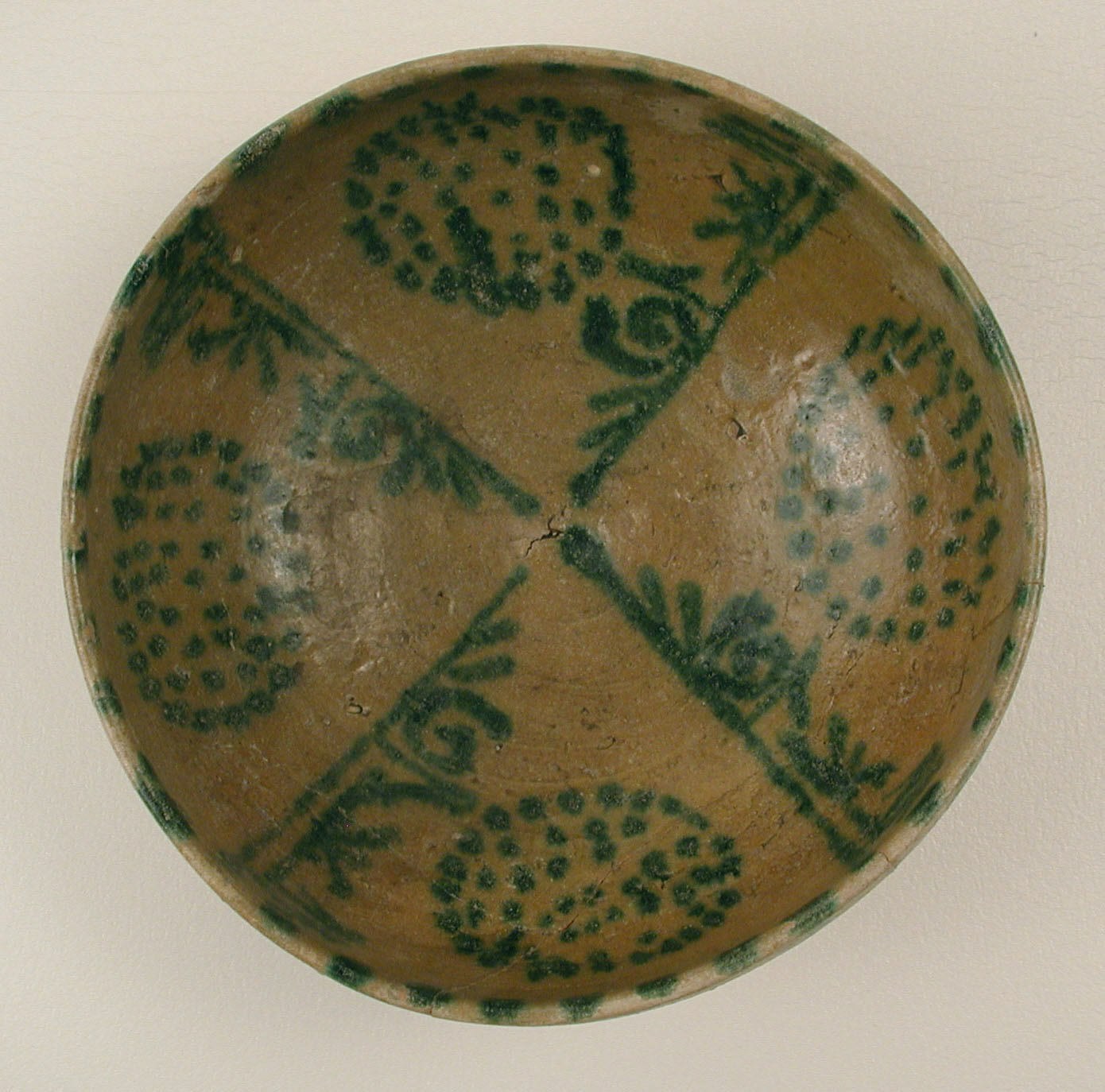
9th–10th century · CP-LIB-MET-449585 · consulted 2026-10-12 · The Metropolitan Museum of Art · CC0 (museum open access; resized JPEG) · Photo source ↗
Nishapur: a catalogue locality, not a pattern diagnosis
The Metropolitan Museum of Art records this bowl as Iranian, from Nishapur, and dates it to the ninth–tenth century. Its medium is earthenware with yellow slip and green decoration under transparent glaze. These are catalogue statements attached to accession 39.40.52, not conclusions produced by matching the photograph to a familiar design. Keeping that distinction makes the bowl useful as a documented reference rather than a template for authenticating other objects.
Nishapur ceramics belong to an urban history of production, exchange and use. A surviving bowl is only one part of that history. The object record should be consulted for excavation, acquisition and bibliographic evidence before expanding a claim about where it was found or how it circulated. The museum’s geographical field and the bowl’s current collection history describe different things: production attribution is not a complete chain of ownership.
Read the decoration from the whole bowl inward
In the photograph, green lines organise the interior into broad divisions containing clusters of spots and plant-like strokes. Begin with this arrangement before trying to name individual elements. Note how decoration follows the curved interior and how the rim completes the composition. A flat reproduction changes the experience of looking into a vessel; it does not convey its depth, weight or actual surface gloss.
The museum title uses “pseudo-inscriptions.” Preserve that word rather than inventing a translation. Letter-like ornament may evoke writing without providing a readable sentence. A proposed reading would need a qualified reader, a clear image and an explanation of how the forms support it. Ornamental resemblance alone cannot establish language, a maker’s name, a blessing or a date.
- Describe divisions, spot clusters and line direction before interpretation.
- Record letter-like ornament without presenting guessed words as a transcription.
- Separate the visible composition from catalogue attribution.
Body, slip, decoration and glaze are different layers
The catalogue medium gives a sequence of descriptive layers: an earthenware body, yellow slip, green decoration and a transparent glaze. Slip is not simply another name for glaze. It is a clay-based surface preparation or decoration, whereas glaze forms a vitreous coating during firing. The photograph supports a visual discussion of placement and colour, but it does not identify the chemical composition of the green colourant or establish a kiln recipe.
Compare this bowl with a ceramic described as painted on opaque white glaze. The two descriptions specify different surface systems even if both objects display dark ornament on a light ground. Do not collapse them into “Persian pottery” and lose the technical distinction. Equally, do not assume that every visible pale area on a damaged object exposes original slip: fills, coatings and lighting can change appearances.
Condition reading without touching the evidence
The image shows lines and interruptions across the surface. They can be recorded as visible features, but an online photograph is not a condition report. A conservator can distinguish fractures, joins, losses and restoration using examination and documentation unavailable in a front view. Avoid describing every dark line as an original firing crack or every light patch as modern fill.
For an object in private ownership, request photographs of the exterior, foot and joins, together with a written treatment history where available. Never tap, scratch, scrape or apply solvent to determine age. A decorative historical bowl should not be used for food simply because its form suggests eating: unknown glaze composition, repairs and deterioration require a separate safety assessment.
Using a documented bowl in collecting research
This museum object offers a reference point for vocabulary and close looking, not a visual certificate for an auction lot. Compare each candidate’s stated body, decoration, measurements, condition and provenance on its own terms. A seller’s “Nishapur” label may be broad attribution or marketing shorthand; obtain the actual evidence rather than transferring the museum bowl’s locality to a similar design.
For a historical ceramic, lawful provenance and export documentation matter as much as visual similarity. For new handmade Iranian pottery, ask for a named maker, production location and process. These are separate collecting categories. Contemporary work does not become medieval because it borrows an old composition, and a genuine museum reference does not make undocumented antiquities safe to acquire.
- Collection
- The Metropolitan Museum of Art
- Accession
- 39.40.52
- Catalogue date
- 9th–10th century
- Origin as catalogued
- Iran
Keep the evidence layers separate
A useful research record distinguishes direct observation, the institution’s catalogue statements and your own interpretation. None of these should silently replace the others. Record the source and access date before comparing a historical object with a current listing.
- Observe: shape, layout and visible features.
- Attribute: retain the catalogue’s exact qualifications.
- Investigate: seek additional views, condition information and lawful provenance.
| Evidence | Documented statement | What it does not establish |
|---|---|---|
| Identity | Bowl with Green Pseudo-Inscriptions and Clusters of Spots · 39.40.52 | Identity or authenticity of another object |
| Date | 9th–10th century | An independent date for a similar listing |
| Material | Earthenware; yellow slip with green decoration under transparent glaze | A complete technical analysis from the photograph |
| Origin | Iran | Provenance of contemporary goods with similar ornament |
| Photo licence | CC0 (museum open access; resized JPEG) | Rights to unrelated auction or shop photographs |
References and further reading
- [1] The Metropolitan Museum of Art: Bowl with Green Pseudo-Inscriptions and Clusters of Spots, 39.40.52 ↗Primary catalogue source; consulted 12 October 2026. Qualifiers and collection updates take precedence over this editorial reading.
- [2] Canadian Conservation Institute: Caring for cultural heritage ↗Preventive conservation context, not a treatment prescription.
These sources provide context, not authentication or provenance for an individual object. Editorial interpretations remain under review.