
Collector guide · 3 min read
Reading early Iranian silk: paired animals, roundels and fragment edges
CraftPersia editorial draft · specialist review pending · updated 2026-10-12
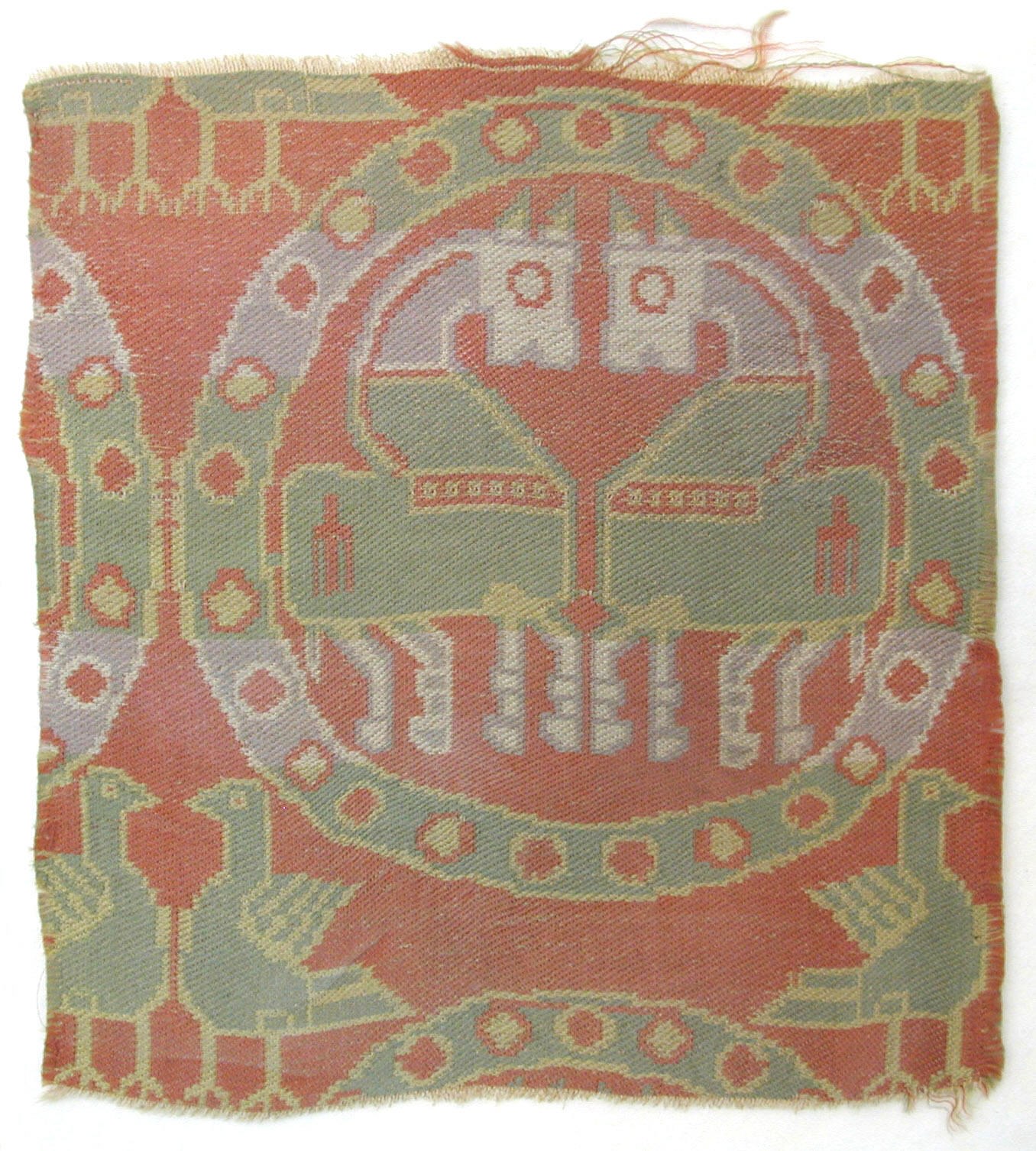
8th–9th century · CP-LIB-MET-449532 · consulted 2026-10-12 · The Metropolitan Museum of Art · CC0 (museum open access; resized JPEG) · Photo source ↗
An early silk fragment, not a complete garment
The Met dates textile fragment 38.147 to the eighth–ninth century and records Iran as its country. The medium is woven silk. Its surviving edges do not establish the dimensions or function of the original textile. It might be tempting to call any richly patterned fragment a robe, hanging or ceremonial cloth, but the photograph alone supplies none of those complete histories.
Use the catalogue’s neutral title when the original format is uncertain. A fragment can preserve important design and structural evidence without retaining its original setting. Museum acquisition history should also be distinguished from ancient use: entry into a collection is a later event, not the textile’s manufacture date.
Paired animals within a patterned roundel
The colour photograph shows paired, stylised animals framed by a large roundel and a surrounding patterned field. Their relationship, spacing and orientation are observable. Naming a precise species or assigning an unqualified symbolic meaning requires more evidence. Shared animal and roundel compositions circulated across regions and media, so one motif cannot establish a particular place of manufacture.
The surviving composition reaches cut or damaged edges. Avoid completing the missing repeat in prose as though the full design survived. A reconstruction drawing would need to distinguish surviving evidence from proposed continuation. Likewise, do not apply the names of later carpet layouts automatically to this much earlier woven cloth.
- Describe paired figures and the roundel before symbolism.
- Mark missing design areas as unknown rather than mentally restoring them.
- Preserve the museum’s early date instead of calling the textile Safavid.
Woven pattern is not embroidery or print
The catalogue calls the silk woven. A woven design is organised through interlacing yarns, whereas embroidery adds stitches to an existing ground and printing applies decoration to a surface. These distinctions matter even when modern products reproduce the same animals. Do not call the object block-printed simply because its design repeats.
The published medium is brief and does not by itself establish a named compound weave. A close structural examination or a detailed textile catalogue would be needed before assigning terms such as samite, lampas or brocade. Describe only what the source supports. This also avoids treating “silk” as evidence that every strand or added component has been analytically identified.
Edges, loss and colour are historical evidence
An irregular perimeter, exposed yarn ends and missing areas can be studied without handling. They do not automatically distinguish ancient wear from later cutting, sampling or damage. A condition record should identify location and extent, and a provenance record should say whether the fragment was separated from a larger object when that history is known.
Light exposure, storage and photography can all change perceived colour. The photograph cannot establish an original dye recipe, whether every colour is original, or how much fading occurred. Never wet a thread, pull a yarn or hold old silk against strong light to make a diagnosis. Fragile textiles benefit from support and limited handling rather than demonstrations of supposed strength.
Comparative research and responsible display
Compare the object with other catalogued textiles by date, stated origin, structure and motif organisation, not simply by palette. Keep an eighth–ninth-century reference separate from Safavid and Qajar material. “Persian silk” can cover many centuries; a library record should restore the distinctions hidden by that broad label.
In a home collection, a conservation specialist can advise on a full-support mount, light exposure and enclosure suitable to the particular fragment. Do not attach it with household glue or pins. For new Iranian handmade silk work, record the maker and loom process directly. The museum photograph provides historical context and no evidence that a current seller’s object shares its age or origin.
- Collection
- The Metropolitan Museum of Art
- Accession
- 38.147
- Catalogue date
- 8th–9th century
- Origin as catalogued
- Iran
Keep the evidence layers separate
A useful research record distinguishes direct observation, the institution’s catalogue statements and your own interpretation. None of these should silently replace the others. Record the source and access date before comparing a historical object with a current listing.
- Observe: shape, layout and visible features.
- Attribute: retain the catalogue’s exact qualifications.
- Investigate: seek additional views, condition information and lawful provenance.
| Evidence | Documented statement | What it does not establish |
|---|---|---|
| Identity | Textile Fragment · 38.147 | Identity or authenticity of another object |
| Date | 8th–9th century | An independent date for a similar listing |
| Material | Silk; woven | A complete technical analysis from the photograph |
| Origin | Iran | Provenance of contemporary goods with similar ornament |
| Photo licence | CC0 (museum open access; resized JPEG) | Rights to unrelated auction or shop photographs |
References and further reading
- [1] The Metropolitan Museum of Art: Textile Fragment, 38.147 ↗Primary catalogue source; consulted 12 October 2026. Qualifiers and collection updates take precedence over this editorial reading.
- [2] Canadian Conservation Institute: Caring for cultural heritage ↗Preventive conservation context, not a treatment prescription.
These sources provide context, not authentication or provenance for an individual object. Editorial interpretations remain under review.