
Collector guide · 7 min read
Reading Baluchi embroidery photographs: stitches, mirrors and maker evidence
CraftPersia editorial draft · specialist review pending · updated 2026-10-14
Begin with the whole piece, not an isolated stitch
Baluchi needlework is associated with textile traditions of Baluch communities across national borders. A craft name alone cannot establish manufacture in Iran. The NafisAccessory listing explicitly states that the work is hand-sewn by rural Baloch women and girls of Iran, while also labelling the product “Made in Germany”. Keep those statements separate: the embroidery is seller-stated Iranian handwork, but the finished accessory’s assembly location and individual maker are not independently established. Do not simplify the record to claim that every component was made in Iran.
Start a photographic record with the complete object. Record its outline, finished edges, repeat direction and whether the embroidery belongs to a garment panel, accessory or separately mounted textile. Do not call a small rectangle the front of an original dress without evidence of its original format. A border cropped out of the photograph may contain construction details that are more informative than the central pattern. Keep the listing title and the neutral description of the visible piece in separate fields.
- Record the complete format and stated measurements.
- Distinguish Iranian manufacture from the wider Baluch craft tradition.
- Retain the seller’s precise maker claim and consultation date.
Ground cloth, stitching and attached mirrors
Embroidery adds thread to an existing ground. Describe that relationship before choosing a stitch name: are threads forming close bands, filling geometric units or outlining a shape? A photograph may show the direction of visible threads but not the entire path through the cloth. Counting stitches reliably requires scale, sharp focus and an identifiable area. Neither neatness nor apparent irregularity is a reliable hand-production test on its own.
A reflective element is a separate component, not a thread colour. In mirror embroidery, record its shape and the visible attachment surrounding it without guessing whether it is glass, plastic or another reflective material. The front view does not reveal the complete securing method or the condition of a backing. Ask for a photograph without flash as well as one with indirect light; glare can conceal broken edges, loose securing stitches and the surrounding embroidery. Do not infer an original mirror from a shiny appearance.
What a reverse photograph can and cannot resolve
A reverse view can reveal thread passages, knots, backing, lining and how an embroidered panel was assembled into another object. It is especially useful when a listing conflates the making of the cloth, its embroidery and the sewing of an accessory. Different people may perform those operations. A divided workflow is not inherently less handmade; it simply needs a description that identifies the actual contributions instead of inventing a single artisan biography.
Request the reverse of the same object, not a process photograph from a different piece. If a lining hides the stitches, keep that as a limitation rather than asking the owner to unpick it. Sewing-machine seams around an otherwise hand-embroidered panel do not automatically mean the embroidery is machine-made. Conversely, a hand-finished edge cannot prove that all decoration was stitched by hand. Evidence should be attached to the operation it actually documents.
- Ask for front, reverse, edges and a detail with scale.
- Identify embroidery, lining and assembly separately.
- Never remove a lining or pull a thread to test construction.
Condition, display and care questions
Record loose threads, stains, breaks in reflective elements and changes along folded edges by location. Colour differences can reflect lighting, wear, dye variation or later treatment. A screen image cannot establish dye chemistry, fibre content or colourfastness. Avoid calling thread silk or ground cotton unless the maker or technical source states it, and preserve any uncertainty in that statement.
Do not wash an unfamiliar embroidered piece on the basis of its apparent sturdiness. Mixed components may respond differently to water, heat and pressure. For contemporary work, obtain the maker’s care instructions and ask whether they apply to both cloth and reflective attachments. Historical or fragile textiles require object-specific conservation advice. Supported storage, limited handling and avoidance of sharp folds are useful starting questions, not a universal treatment plan.
Maker evidence is different from permission to reproduce a photograph
An explicit statement that work is handmade by women in an Iranian province supports conservative inclusion as a seller-stated example. It does not identify a named maker, certify fair payment or independently establish the object’s production history. Ask for those details directly and do not present a review, shop location or cultural design name as a substitute. Shipping from another country and making in that country are also different facts.
The listing photograph belongs to its rights holder even when it is publicly accessible. CraftPersia credits NafisAccessory and links to the listing, but credit is not a licence. Save the image identifier, source URL, access date and requested uses when seeking permission. Ask whether the seller owns the photograph or has authority to permit reuse. If permission is refused, identify the photograph for removal across the guide, related galleries and the image register rather than deleting only one visible placement.
A practical evidence checklist
Attach each observation to the actual object and each attribution to its source. An unanswered question remains an evidence gap, not a reason to invent a maker or workshop.
- Capture the complete object and a scaled detail.
- Record exact hand-process and production-location claims.
- Request reverse views and condition information.
- Keep image permission separate from product provenance.
Related photographs and screened examples
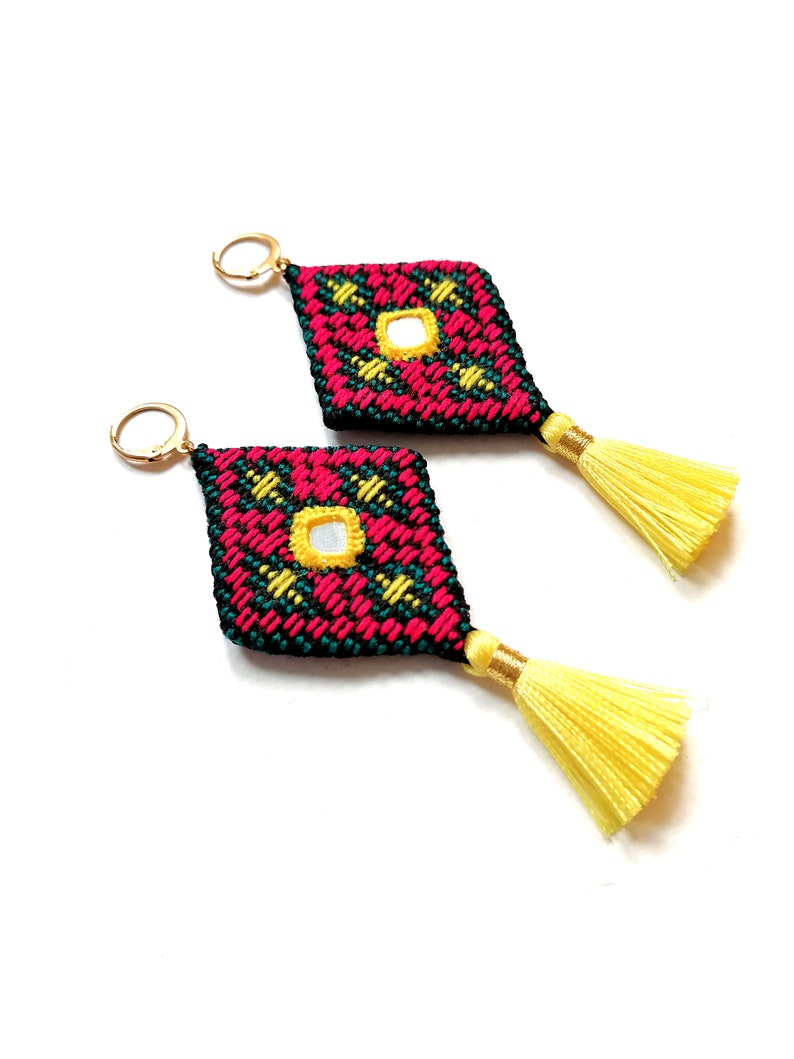
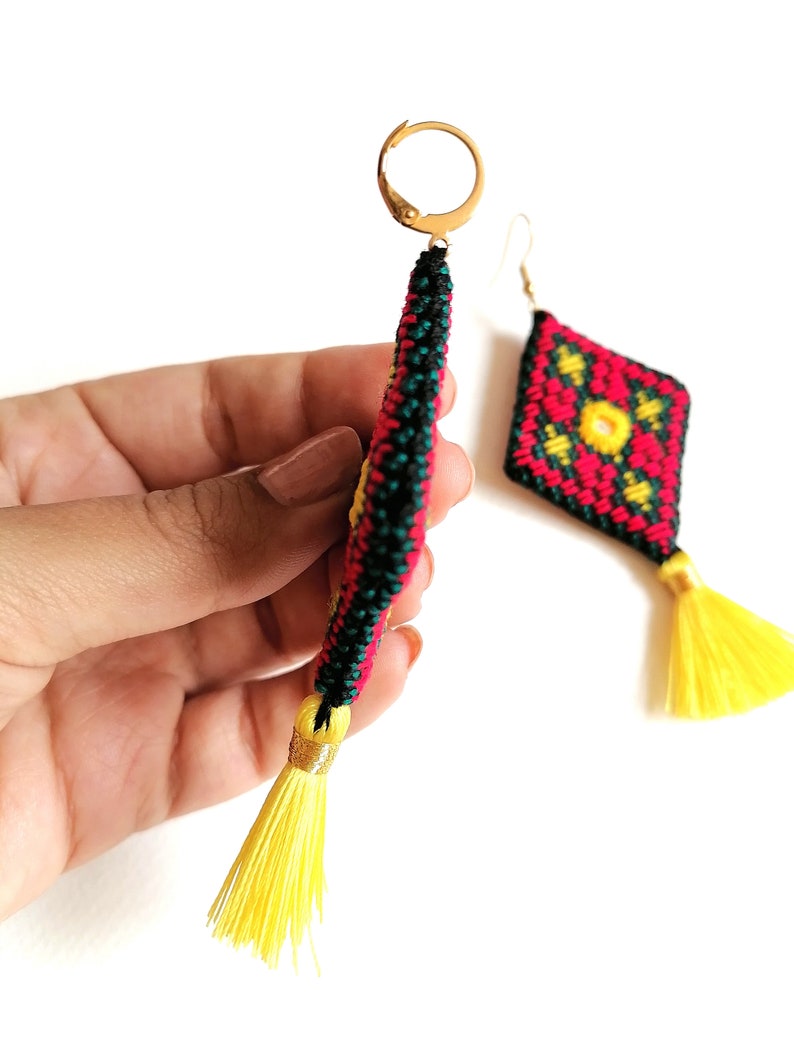
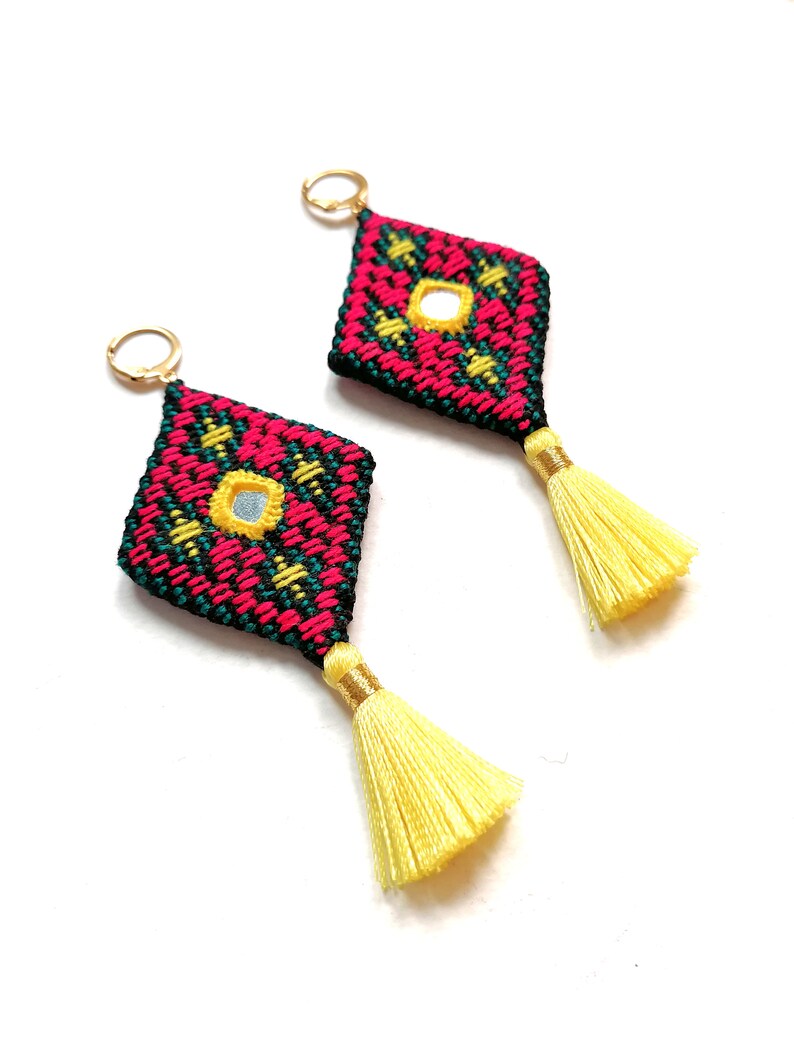
Representative photographs only. Marketplace examples rely on seller descriptions; CraftPersia has not independently authenticated their maker, origin, or rights status. Follow each source link for the listing context.
| Evidence | Useful observation | Limit |
|---|---|---|
| Whole view | Format, boundaries and design organisation | No complete condition report |
| Detail view | Visible threads, edges or attachment | No independent fibre or material analysis |
| Seller’s origin statement | Exact quotation and source date | Not independently verified |
| Photographer credit | Source and rights-holder contact | Credit alone is not permission |
References and further reading
- [1] NafisAccessory: Baluchi needlework and mirror embroidery, Etsy 1636962520 ↗Rechecked 14 October 2026: seller states hand sewing by Baloch women and girls of Iran; also labelled Made in Germany. Embroidery and final assembly must not be conflated. Reuse rights not reviewed.
These sources provide context, not authentication or provenance for an individual object. Editorial interpretations remain under review.