
راهنمای خرید · 7 min read
Reading a Meybod zilu listing: whole view, weave detail and evidence limits
CraftPersia editorial draft · specialist review pending · بهروزرسانی 2026-10-14
این راهنما هنوز به فارسی ترجمه نشده است و فعلاً به انگلیسی نمایش داده میشود.
One listing, two useful scales of observation
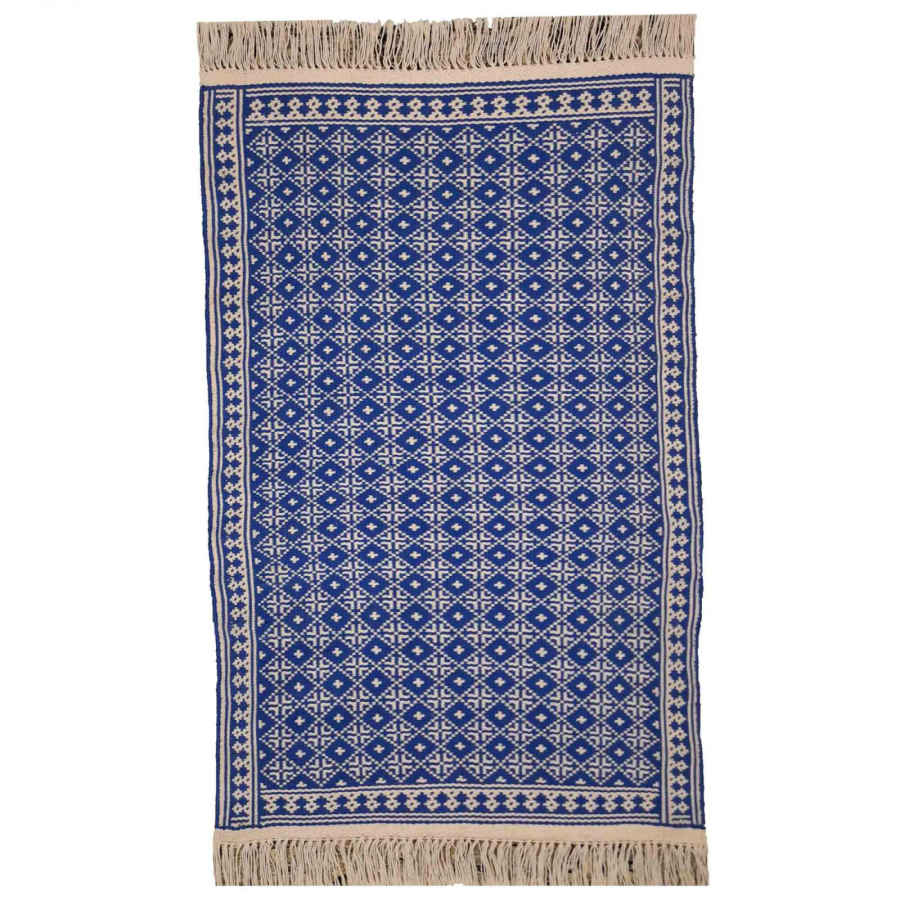
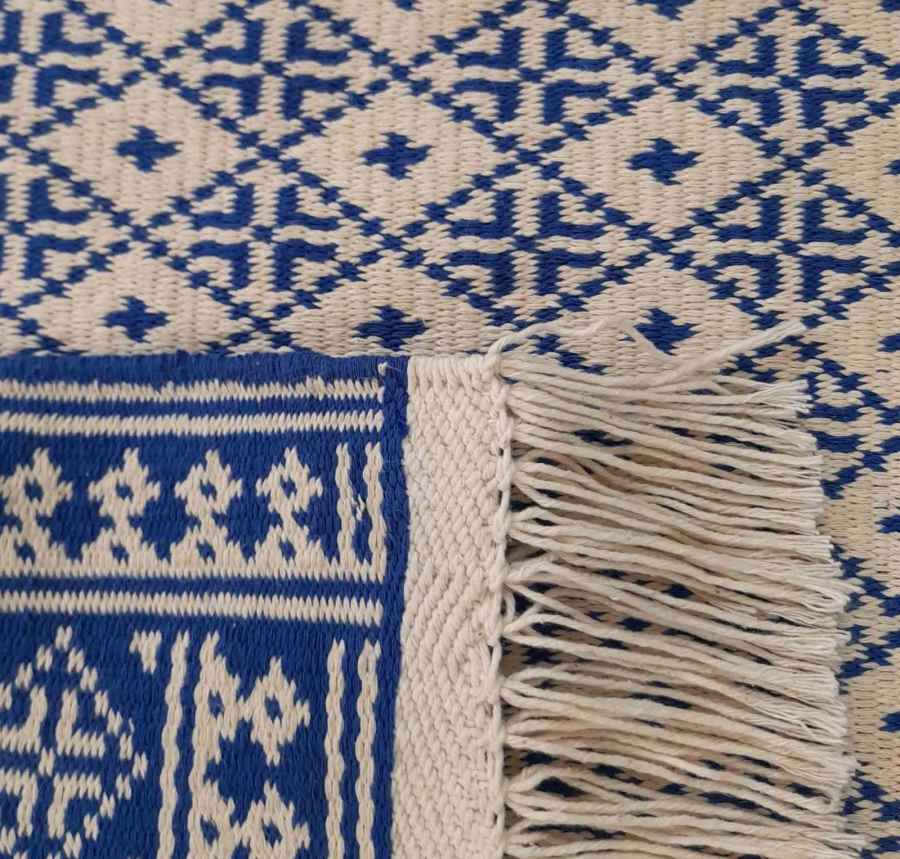
The ShopiPersia example in this guide is described by its seller as a handwoven cotton zilu made in Meybod, Iran, measuring 160 × 100 centimetres. These are the seller’s recorded claims. They are not an independent examination by CraftPersia and should not be transferred to a different rug with a similar blue-and-white pattern. The whole-view photograph and weave-detail photograph belong to the same listing; keeping them together avoids borrowing a close-up from an unrelated object.
The complete view records the rectangular format, border arrangement and relationship between field and edges. The detail view makes the visible thread structure and fringe easier to discuss, but cannot give the rug’s full size or condition. Neither image supplies thickness, weight or the feel of the surface. A useful listing combines these complementary views with actual measurements and a written account of production rather than treating a decorative room photograph as a complete record.
- Whole view: format, field and borders.
- Detail: visible threads, edge and fringe.
- Written record: measurements, maker and production location.
A flatwoven structure, not a blue-and-white carpet diagnosis
Zilu is a flatwoven textile tradition associated particularly with Meybod. It should not be described as a knotted pile rug merely because it is used as a floor covering. The cited weaving research discusses its structure and process; a retail image can illustrate a finished example without supplying the full loom sequence. Keep technical context from the research source separate from what the seller says about this particular piece.
Blue and white are visible colour observations, not a manufacture test. Similar palettes occur in other textile processes and in industrial products. Equally, fringe can reflect warp ends or later finishing, and its presence does not independently establish handweaving. Ask whether the photograph shows the original edge, how the ends are finished and whether the reverse is available. Do not pull strands or loosen an edge to test the structure.
Read border and field before naming motifs
Describe the central field and each border as separate zones. Note the direction of the repeat, changes where the border turns a corner and how light and dark areas relate. That record is more reliable than immediately attaching a familiar motif name. Named patterns may vary between sources and local practice; use a documented name only when the maker or a relevant technical source connects it to the exact pattern.
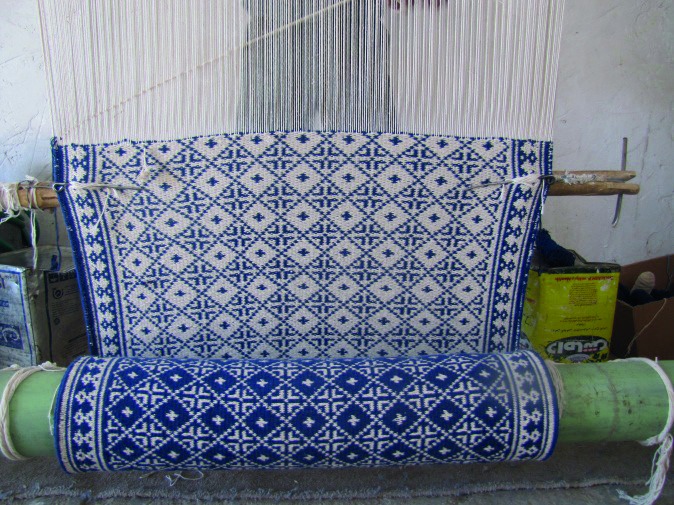
The research-context loom photograph shown with zilu elsewhere in the archive is not a production photograph of this retail rug. It must not be used to imply that the pictured loom or workshop made the listing item. Likewise, a detail crop cannot be compared at knot-count scale because this is not a knotted pile textile. Comparison should follow the documented construction, not a grading system imported from another craft.
Questions before purchase or display
Confirm whether stated dimensions include fringes and whether the photographed piece is the actual item supplied. Handwoven pieces can differ within one listing; obtain current photographs when an exact appearance matters. Ask for fibre content, whether the work is newly made or older, any repairs and how the seller knows the production location. A shop shipping address, marketplace tag or name containing “Persian” does not answer those questions.
For floor use, ask about slip resistance, a suitable support and compatibility with the floor finish. Do not claim a textile is washable, colourfast or suitable for high traffic without relevant maker guidance. For a fragile older example, supported display and conservation advice take priority over domestic use. A price is time-sensitive; consult the seller for the current amount, shipping, taxes and availability rather than treating an archived listing as an offer by CraftPersia.
- Confirm actual-item photographs and whether fringes are measured.
- Ask for maker, production date and evidence for Meybod attribution.
- Obtain care and floor-use guidance for the specific piece.
Keep a durable source and rights record
Save the listing identifier DKP-3840078, its URL and the date consulted alongside both image identifiers. Record the whole view and detail individually: they are different photographs even though they depict the same object. A later removal request should be able to identify either image without relying on a changing product title or marketplace search result.
ShopiPersia’s photographs are credited commercial listing images with reuse rights not reviewed. Public availability does not grant reproduction rights. Request permission for the specific website uses and confirm who owns the photographs. A scholarly article’s licence does not cover the shop images, and the shop’s provenance claim does not resolve image ownership. This separation protects both the research record and the rights-review process.
A practical evidence checklist
Attach each observation to the actual object and each attribution to its source. An unanswered question remains an evidence gap, not a reason to invent a maker or workshop.
- Capture the complete object and a scaled detail.
- Record exact hand-process and production-location claims.
- Request reverse views and condition information.
- Keep image permission separate from product provenance.
عکسهای مرتبط و نمونههای بررسیشده
این تصاویر فقط نمونههای نمایشی هستند. نمونههای بازار بر توضیحات فروشنده متکیاند و سازنده، منشأ یا وضعیت حقوقی آنها بهطور مستقل توسط کرفتپرشیا تأیید نشده است. برای زمینهٔ کامل، پیوند منبع هر تصویر را ببینید.
| Evidence | Useful observation | Limit |
|---|---|---|
| Whole view | Format, boundaries and design organisation | No complete condition report |
| Detail view | Visible threads, edges or attachment | No independent fibre or material analysis |
| Seller’s origin statement | Exact quotation and source date | Not independently verified |
| Photographer credit | Source and rights-holder contact | Credit alone is not permission |
منابع و مطالعات بیشتر
- [1] ShopiPersia: Persian handwoven floor covering Zilou, DKP-3840078 ↗Seller-stated handwoven in Meybod, Iran; consulted 14 October 2026. Commercial photographs, reuse rights not reviewed.
- [2] Rahmani and Moghanipoor: The Technique of Zilu Weaving in Anatolia, Caucasus and Iran ↗Art-Sanat 11 (2019). Technical context, not documentation of the retail object.
این منابع زمینهٔ پژوهشی فراهم میکنند، نه تأیید اصالت یا پیشینهٔ یک شیء خاص. تفسیرهای سردبیری همچنان در دست بررسیاند.