
راهنمای مجموعهداران · 11 min
Sarouk rugs: dense Arak-area weaving and the 'American Sarouk'
Editorial team · بهروزرسانی 2026-10-14
این راهنما هنوز به فارسی ترجمه نشده است و فعلاً به انگلیسی نمایش داده میشود.
Where the name comes from
Sarouk (Saruq) is a village near Arak, formerly Sultanabad, in central Iran. The name became a market label for well-made rugs from many villages in the area, not only the village itself.
Construction
Sarouks are usually woven with the asymmetric knot on a cotton foundation, with two wefts between each row of knots. They are dense and heavy for their size and have a short to medium pile.
- Cotton warps and wefts, often blue-dyed wefts
- Asymmetric knots
- Firm, heavy handle
- Overcast sides in dark wool
The 'American Sarouk'
From about 1910 to the 1930s many Sarouks were woven for the US market with floral sprays on a rose-red field. Many were later painted or chemically treated in the US to deepen the red. Painted areas can show as uneven colour on the pile tips compared with the knot roots.
Older Ferahan-Sarouks
Earlier Sarouks, sometimes called Ferahan-Sarouks, tend to have compact medallion designs on blue or ivory grounds. They are less common and should be described with care.
Buying checklist
- Ask the seller what the regional name is based on: town, village group or design only
- Turn the rug over and look at knot type, warp colour and weft count
- Check ends, sides and pile height for wear or re-weaving
- Ask whether dyes have run or been chemically washed
- Part the pile: compare colour at the tips and the base for later painting
- Get any claim about age, region or handmade origin in writing
Care
A dense Sarouk can be rolled or loosely folded for short periods, but rolling is safer. Use a thin underlay and rotate the rug yearly.
A note on this guide
This is general information from the CraftPersia editorial team and has not been reviewed by a specialist. Regional names in the rug trade are market labels, and design alone is weak evidence of origin. This guide is not a valuation or authentication.
عکسهای مرتبط و نمونههای بررسیشده
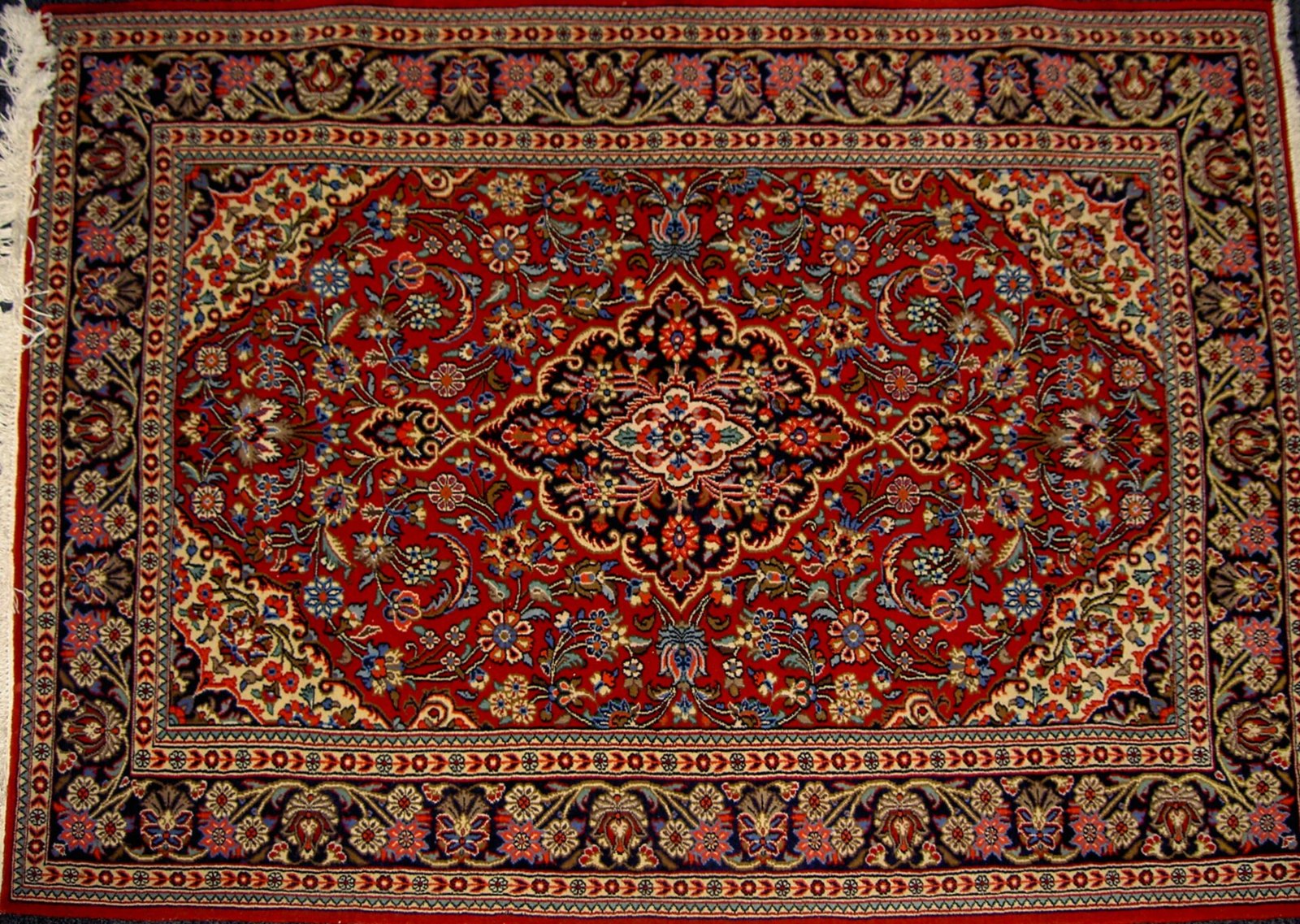
این تصاویر فقط نمونههای نمایشی هستند. نمونههای بازار بر توضیحات فروشنده متکیاند و سازنده، منشأ یا وضعیت حقوقی آنها بهطور مستقل توسط کرفتپرشیا تأیید نشده است. برای زمینهٔ کامل، پیوند منبع هر تصویر را ببینید.