
راهنمای مجموعهداران · 3 min read
Reading an Iranian brocaded panel: rosebush repeats, deer and metallic yarn
CraftPersia editorial draft · specialist review pending · بهروزرسانی 2026-10-14
این راهنما هنوز به فارسی ترجمه نشده است و فعلاً به انگلیسی نمایش داده میشود.
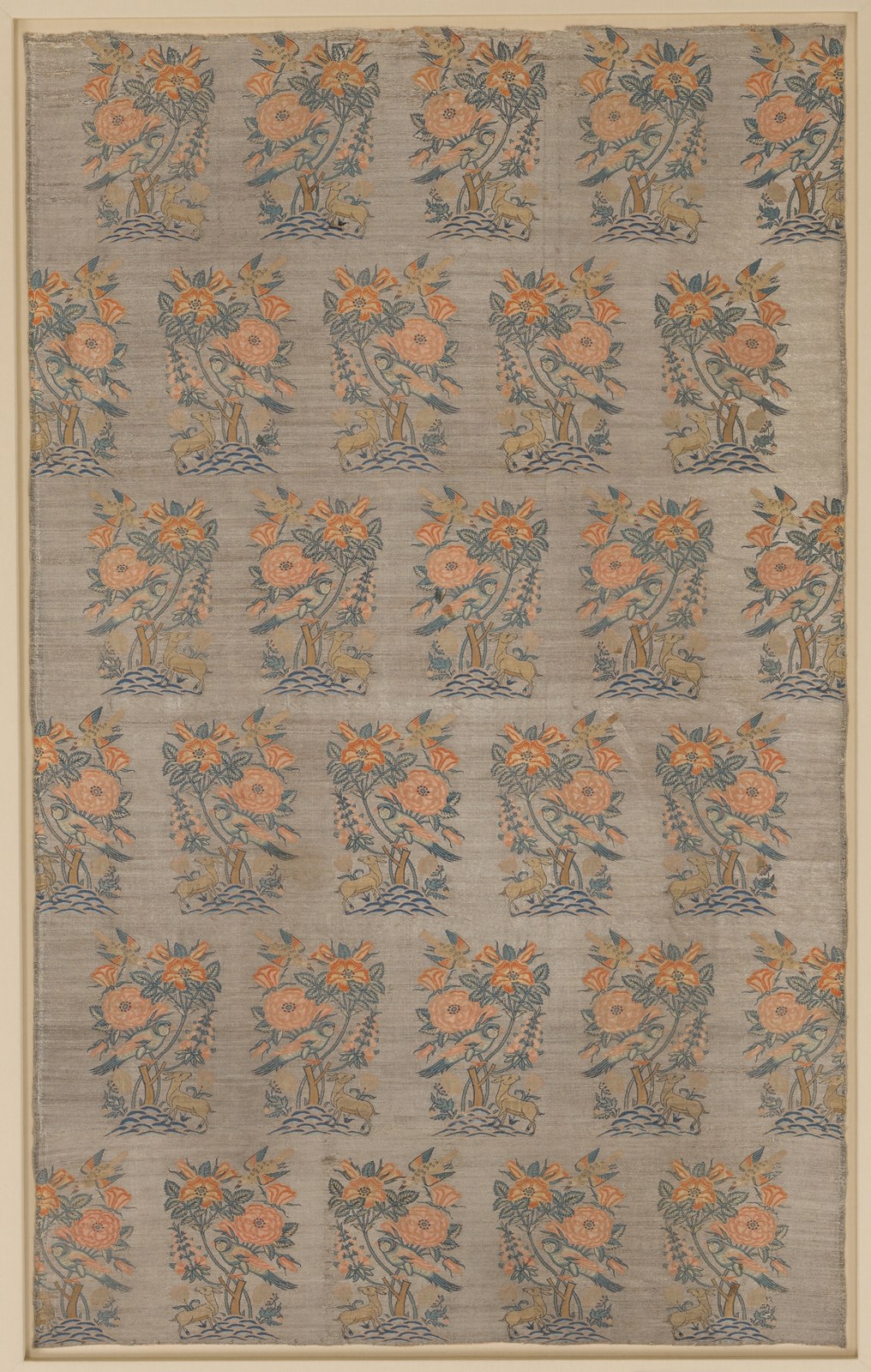
late 17th–early 18th century · CP-LIB-MET-450991 · consulted 2026-10-14 · The Metropolitan Museum of Art · CC0 (museum open access; resized JPEG) · منبع عکس ↗
A dated panel, not an invented original garment
The Met records this Iranian panel as late seventeenth–early eighteenth century, accession 49.32.99. The title identifies a rosebush, birds and deer pattern. Its medium lists silk, silver and gilded metal wrapped thread, in compound twill weave, brocaded. Preserve the date range rather than assigning the entire interval to a later dynasty or calling it generically ancient silk.
Panel describes the surviving format. It does not by itself establish an original robe, hanging or furnishing. A rectangular museum presentation may include later mounting or support that is not the original textile’s edge. Consult the catalogue for dimensions and assembly evidence before writing a use history. Manufacture, later adaptation and current display can represent different stages.
Reading the rosebush repeat without fixing its meaning
The whole photograph shows repeated floral units, with animal and bird forms integrated into the patterned field. Describe the direction, spacing and relationship of these elements before connecting them to poetry or hunting imagery. The title names birds, not a securely identified species. “Rose and nightingale” is a literary comparison that would need its own justification for this particular panel.
Follow the repeat to the edges and record where it is interrupted. The surviving panel may not preserve the original cloth width or complete repeat sequence. A cropped detail can explain a motif, but it should accompany rather than replace the whole-object image. The repeat’s apparent regularity cannot distinguish handloom production from every modern mechanical imitation.
- Begin with whole-panel direction and repeat spacing.
- Keep birds distinct from an unsupported species identification.
- Do not reconstruct missing cloth width from a front view.
Compound twill and brocading: retain the specific wording
The museum describes a compound twill weave, brocaded. This is more specific than calling the panel simply brocade, and it should not be silently replaced with lampas or embroidery. Woven pattern is organised through yarn interlacement; embroidery adds stitches to an existing ground. Both can produce complex ornament but represent different processes.
The catalogue’s material statement distinguishes silk from silver and gilded metal wrapped thread. Metal wrapped around a core is not equivalent to a solid metal filament. The short record cannot identify every core fibre, alloy or manufacturing stage. Magnified structural views and technical documentation are needed before reconstructing the loom setup or assigning individual yarn functions.
Reflective yarn and fragile textile care
A metallic yarn can look bright or dull depending on light, orientation and condition. Shine alone cannot assay gold or silver, and a dark patch does not diagnose corrosion. The photograph supports a description of visible distribution and pattern, not a complete material analysis or condition map.
Do not polish metallic yarns, pull floats, wash the panel or press it with an iron. Mixed materials and earlier repairs may respond differently to moisture and pressure. A textile conservator can advise on full support, safe movement and light exposure. Sharp folds and unsupported hanging can concentrate stress; treatment decisions should follow the individual object’s condition rather than a generic household cleaning rule.
Comparing this panel with contemporary Iranian cloth
Ask separately who made a contemporary textile, where it was woven, which loom process was used and how its metallic components are described. A modern boteh cloth or printed floral panel does not inherit the museum panel’s age, material or construction. Genuine new Iranian handwork and historical museum material are different records, even when displayed in one educational archive.
For historical textiles, ownership and export history, conservation records and both-face photographs belong alongside motif comparisons. Prices cannot establish handwork or precious-metal content. Keep this CC0 image as a source-linked historical reference, and request permission separately for photographs owned by commercial sellers. The panel is not marketplace stock and carries no current sale price here.
- Collection
- The Metropolitan Museum of Art
- Accession
- 49.32.99
- Catalogue date
- late 17th–early 18th century
- Origin as catalogued
- Iran
Keep the evidence layers separate
A useful research record distinguishes direct observation, the institution’s catalogue statements and your own interpretation. None of these should silently replace the others. Record the source and access date before comparing a historical object with a current listing.
- Observe: shape, layout and visible features.
- Attribute: retain the catalogue’s exact qualifications.
- Investigate: seek additional views, condition information and lawful provenance.
| Evidence | Documented statement | What it does not establish |
|---|---|---|
| Identity | Panel with Rosebush, Birds, and Deer Pattern · 49.32.99 | Identity or authenticity of another object |
| Date | late 17th–early 18th century | An independent date for a similar listing |
| Material | Silk, silver and gilded metal wrapped thread; compound twill weave, brocaded | A complete technical analysis from the photograph |
| Origin | Iran | Provenance of contemporary goods with similar ornament |
| Photo licence | CC0 (museum open access; resized JPEG) | Rights to unrelated auction or shop photographs |
منابع و مطالعات بیشتر
- [1] The Metropolitan Museum of Art: Panel with Rosebush, Birds, and Deer Pattern, 49.32.99 ↗Primary catalogue source; consulted 2026-10-14. Qualifiers and collection updates take precedence over this editorial reading.
- [2] Canadian Conservation Institute: Caring for cultural heritage ↗Preventive conservation context, not a treatment prescription.
این منابع زمینهٔ پژوهشی فراهم میکنند، نه تأیید اصالت یا پیشینهٔ یک شیء خاص. تفسیرهای سردبیری همچنان در دست بررسیاند.