
راهنمای مجموعهداران · 11 min
Bakhtiari rugs: garden panels from Chaharmahal
Editorial team · بهروزرسانی 2026-10-14
این راهنما هنوز به فارسی ترجمه نشده است و فعلاً به انگلیسی نمایش داده میشود.
Location
Most rugs sold as Bakhtiari come from settled villages in Chaharmahal and Bakhtiari province, west of Isfahan, such as Shahr-e Kord and Chaleshtar.
The garden design
The field is divided into square or diamond panels, each with a tree, flower or vase. This khesti (brick) design is the best-known Bakhtiari pattern.
Construction
Usually cotton foundations, symmetric knots and a single or double weft, with a thick, heavy handle.
Chaleshtar pieces
Rugs from Chaleshtar are often finer and more carefully drawn. The name is sometimes used for any good Bakhtiari.
Buying checklist
- Ask the seller what the regional name is based on: town, village group or design only
- Turn the rug over and look at knot type, warp colour and weft count
- Check ends, sides and pile height for wear or re-weaving
- Ask whether dyes have run or been chemically washed
- Get any claim about age, region or handmade origin in writing
Care
Heavy Bakhtiaris are durable. Use a non-slip underlay and rotate yearly.
A note on this guide
This is general information from the CraftPersia editorial team and has not been reviewed by a specialist. Regional names in the rug trade are market labels, and design alone is weak evidence of origin. This guide is not a valuation or authentication.
عکسهای مرتبط و نمونههای بررسیشده
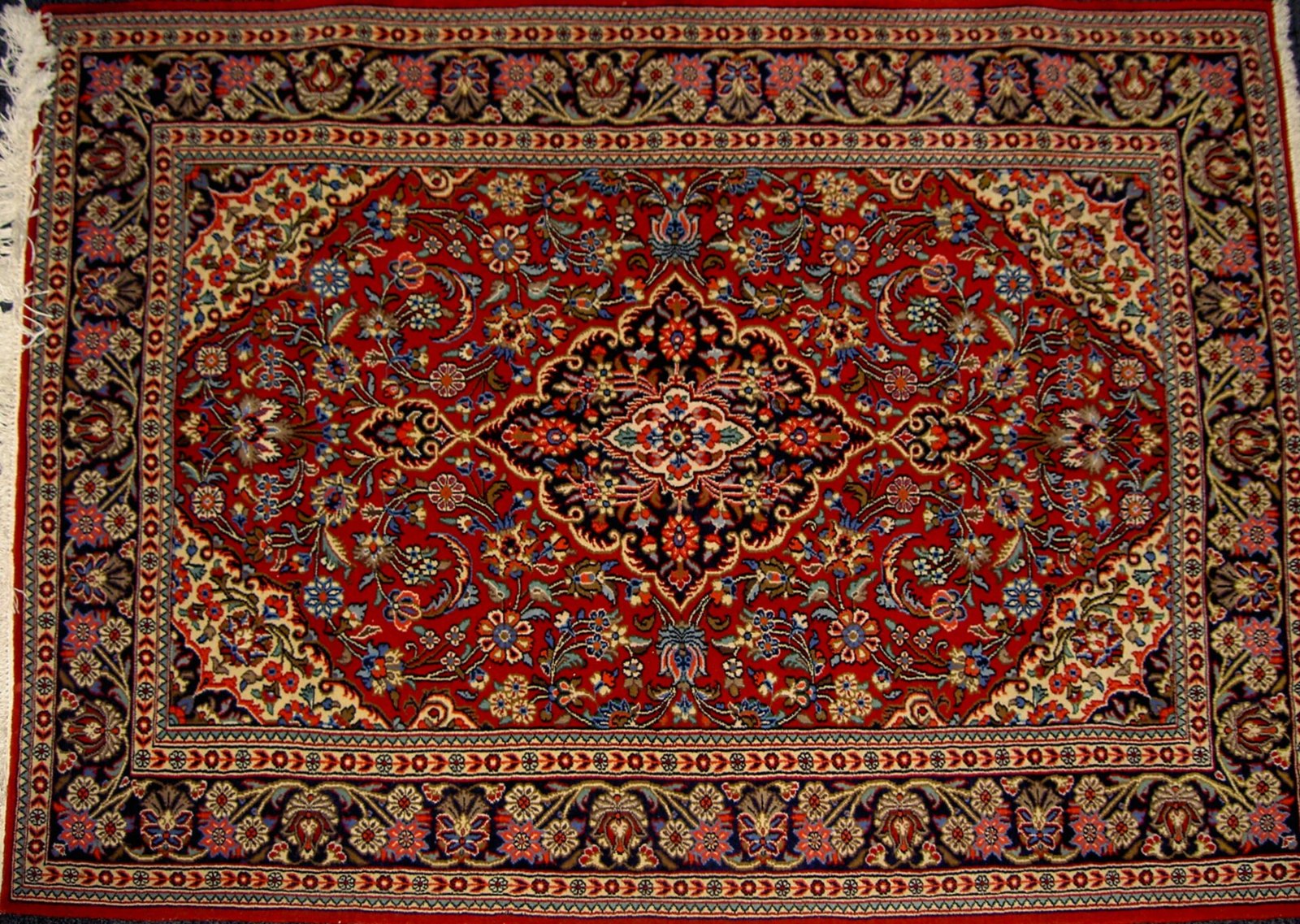
این تصاویر فقط نمونههای نمایشی هستند. نمونههای بازار بر توضیحات فروشنده متکیاند و سازنده، منشأ یا وضعیت حقوقی آنها بهطور مستقل توسط کرفتپرشیا تأیید نشده است. برای زمینهٔ کامل، پیوند منبع هر تصویر را ببینید.